
EMS training has become a regular feature in many fitness studios across Germany. Today, there are also compact EMS devices available for home use – such as the trainers from Bodify.
The Kabel Eins magazine took a closer look at its everyday usability and featured Bodify in an independent report. The focus was on practical application in daily life, device handling, and individual experiences.
How does EMS training at home fit into everyday life?
To test the everyday practicality of the Bodify EMS Set Pro, two couples integrated EMS training into their routine for six weeks. The goal of the Kabel Eins magazine segment was to assess how well the system integrates into daily life and what kind of experiences the participants had.
The test phase was accompanied in a documentary format, documenting the participants’ experiences and everyday use of the devices.
After six weeks, the four testers reported a range of personal impressions. Some found the regular use motivating, while others described a stronger focus on body awareness. For several participants, the topic of everyday movement also gained more importance again.
The segment clearly emphasized that EMS training is not a replacement for balanced nutrition or regular physical activity – rather, it should be seen as a supplementary element of an active lifestyle.
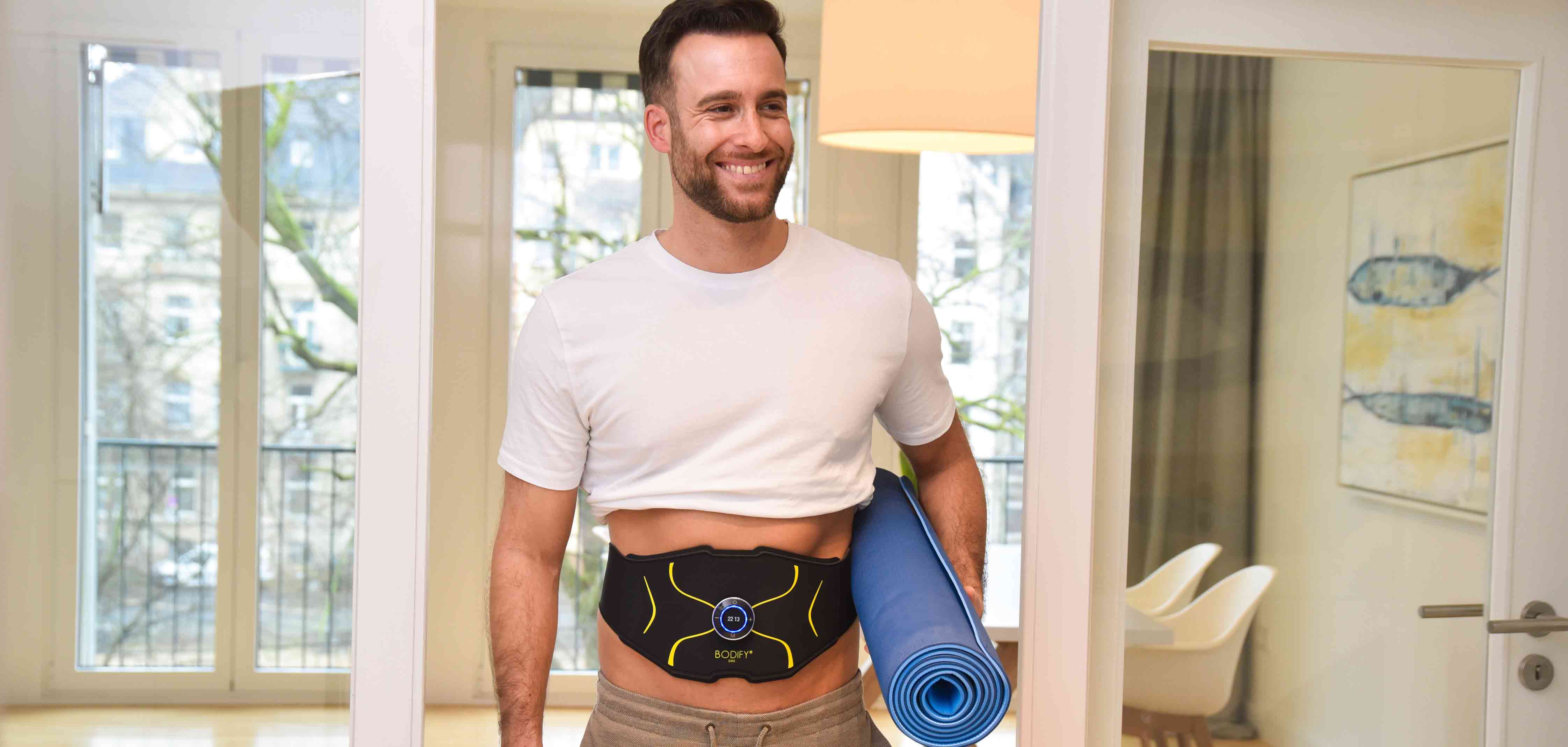
The first days with the EMS trainers
Like many other users, the test participants experienced noticeable muscle contractions. The body typically needs time to adjust to the sensation of the impulses. It’s recommended to begin with a low intensity level and gradually increase it based on personal comfort.
In the early sessions, participants reported a strong sensation of muscle activation. One tester described the muscle feeling as clearly perceptible – especially during the moments when the trainer delivered impulses.
After a few days, the testers began experimenting with different intensity levels and programs. The experience varied greatly: some preferred steady programs, while others found alternating impulse patterns more pleasant.
What matters most is to choose an intensity level that feels comfortable and manageable.
The course of the test – how it went for the participants
During the test phase, the two couples documented their experiences in a video diary. One participant described the EMS impulses as especially noticeable during the first few days.
Through regular documentation, personal insights were gathered and reflected upon – including how well the application could be integrated into daily routines. Some participants reported a stronger focus on body awareness or noticeable muscle activity during and after each session.

The EMS trainers weren’t only used during traditional workout sessions. They were also used during everyday tasks like cleaning or organizing. The ability to integrate the training flexibly into daily routines was seen as helpful by the test couples.
Another key aspect during the test phase was the importance of rest between sessions. As with all forms of physical activity, it’s important to leave enough time between sessions and adapt the routine to your personal comfort.

The conclusion: What were the testers’ impressions?
At the end of the six-week test phase, the participants shared their final impressions of using Bodify in everyday life.
In their final feedback, the testers particularly highlighted the user-friendly design of the trainers. The couples described the handling as easy to use – especially due to the adjustable intensity levels. The wearing comfort of the EMS trainers was also viewed positively in hindsight.
The feedback from this everyday trial offers personal insights into possible ways to integrate EMS training into your own life. Whether and how it fits into your routine depends on personal habits, preferences, and expectations.
